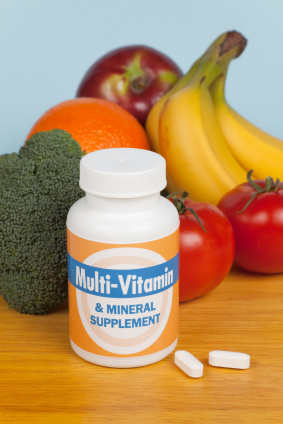
General Vitamin Information (An Overview of Vitamins)
General Vitamin Information (An Overview of Vitamins)
By: Dr. George Obikoya
Vitamins are any of several organic substances that usually are separated into water-soluble (e.g., the B vitamins, vitamin C) and fat-soluble (e.g., vitamins A, D, E, K) groups. They are essential for our normal health and growth. The substances commonly known as vitamins are widely diverse in chemical structure and function. Originally defined as organic compounds, obtainable in a normal diet and capable of maintaining life and promoting growth, vitamins are distinct from carbohydrates, fats, and proteins in function, as well as in the quantities in which we require them. A number of compounds (e.g., choline, carnitine) once grouped with vitamins no longer are considered vitamins. In general, a vitamin essentially means something that must be included in our diet. If a vitamin is absent from our diet or is not properly absorbed, a deficiency disease specific to that vitamin may ensue.
The term vitamin originated from "vitamine," a word first used in 1911 to designate a group of compounds considered vital for life; each was thought to have a nitrogen-containing component known as an amine. The final e of vitamine was dropped when it was discovered that not all of the vitamins contain nitrogen, and, therefore, not all are amines. There is not uniform agreement concerning our vitamin requirements. Differences in opinion arise mainly from different ways by which requirements can be determined and from the scanty data available for the requirements for some of the vitamins. Recommended daily allowances (RDA) are useful guides to knowing how much vitamins you need. However, several factors for examples, genetic variation; presence of specific disease states; therapeutic use of certain drugs; infestation with parasites; relative proportions of other dietary constituents, food additives, or contaminants; environmental stresses; and stimulation of growth rate, can affect how much vitamins we need at any particular time.
Vitamins are not only necessary for our health and well-being, vitamins and minerals will prevent diseases associated with nutritional deficiencies such as scurvy, beriberi, pellagra and rickets, give us healthy bones and teeth, prevent us going blind, and from being prone to unexpected bleeding. Vitamins also protect our hearts from damage, and protect us against cancer. Recent research evidence also suggests that vitamin C and E combined in high doses helps reduce our risk of developing Alzheimer's disease.
We do get some vitamins in our food if we eat a balanced diet. The question still remains. How many of us can claim to eat a balanced diet on a regular basis? Furthermore, we often need much higher doses of vitamins than we can get in a balanced diet to derive maximum benefits from vitamins. For example, the doses of the combination of vitamins C and E recommended to prevent Alzheimer's disease are many times more than their respective RDAs (recommended daily allowances) - and even many cheaper multivitamins!. Check the bottle. Does Centrum give you 400 IU of Vitamin E, which is what you need at minimum? Finally, certain of the vitamins are water soluble, not stored in our body and are excreted in our daily in our urine. We must, therefore, replenish our supplies of these vitamins daily to have sufficient amounts of the vitamins for our needs.
A good multivitamin is the foundation of health and nutrition. Take a look at our scientific reviews of many of the popular brands for factors such as ingredients, areas of improvement, quality level, and overall value. If you are looking for a high quality liquid multivitamin, we suggest that you take a look at the Multivitamin Product Comparisons.
